Site guide
Location planning that survives a restock visit
A vending machine lives at the intersection of electrical capacity, human traffic and a trolley that has to get there twice a week. Floor space left over after furniture is not a specification.
Placement mistakes are slow. The cabinet looks fine on opening week, then restockers start leaving cages in the loading bay because the corridor dog-leg cannot take a turn. Or the compressor runs without pause because the only available socket sits in a glass atrium. Or security decides the machine now blocks a camera. Fixing those after install means drilling, recertifying and explaining a dead week to a client. Do the unglamorous checks first.
Use this page as a site walk, not as inspiration. Pair it with cabinet types so you do not reserve 600 mm for a machine that needs 800 mm with the door open, and with operations so the visit cadence is somebody’s job. If you need a written brief reviewed, contact Reelradarpurepixls.
Footfall is not demand
Hundreds of people passing a machine is advertising, not a queue. Ask who can stop. A hospital corridor may be busy and still be a poor site if staff are on timed tasks and visitors are carrying bags toward a ward. A small break room with a kettle, a microwave and a seating nook can outperform a grand lobby because the dwell time is real. Watch a location at the times you expect trade: shift change, lunch, late study hours, weekend leisure peaks. A mid-morning walk-through is a tourist visit.
Note competing food. A subsidised canteen that opens at the same moment you hoped to sell sandwiches will reshape the mix toward drinks and impulse snacks. That is useful information, not a reason to abandon the site. Place the machine on the path people take when the canteen is closed, and plan a mix that does not fight a full hot counter. The machine should feel like a complement, not a less convenient till.
Power, level and air
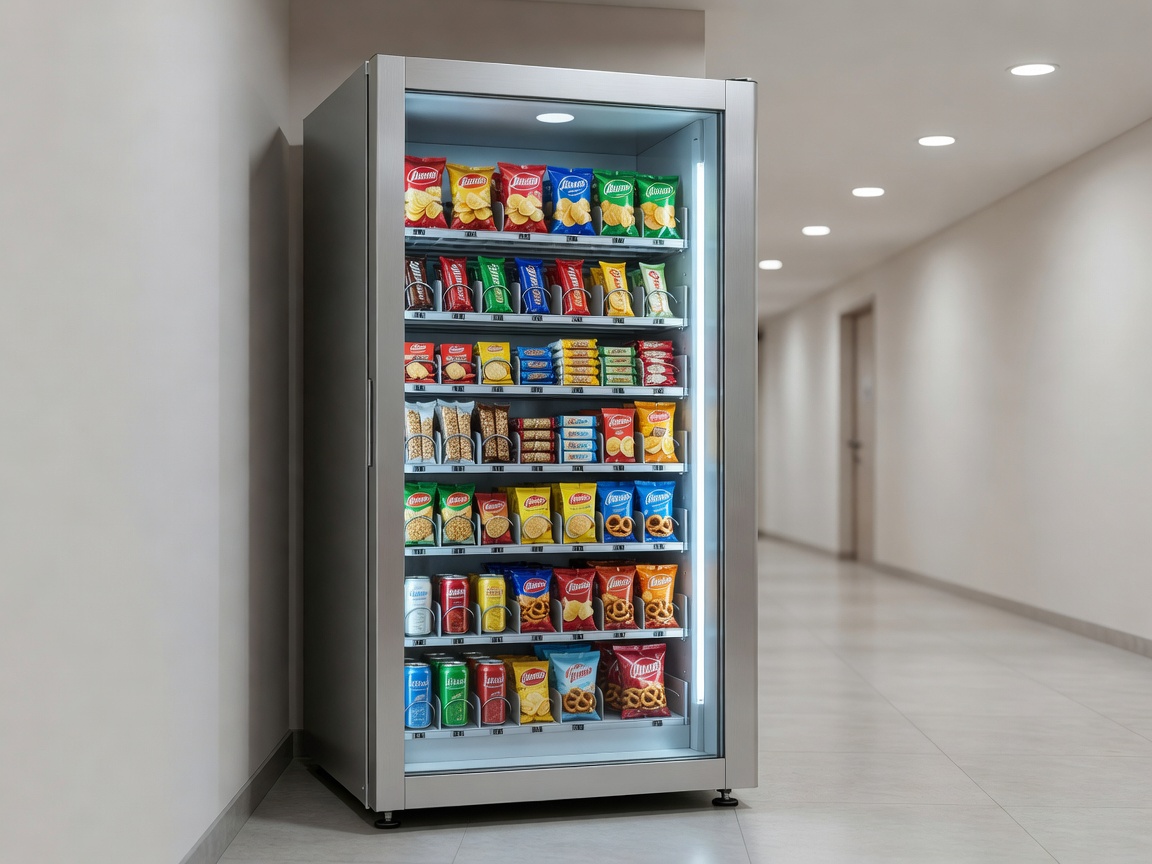
Most cabinets want a dedicated socket on a circuit that will not trip when a nearby kitchen starts. Extension leads across walkways fail inspections and fail physically. Confirm whether the landlord allows a new spur, who certifies it, and whether the isolator is reachable without moving the machine. Refrigerated cabinets also need air. Blocking the condenser with a sofa, a stack of crates or a curtain “to make it look tidier” is a reliable way to shorten compressor life. Leave the clearance the manufacturer states on all vented sides, including after someone later adds a recycling bin.
Floors must be level enough that doors seal and columns feed. A gentle slope that looks fine under a mat can make a drink stack bind. Check for standing water, leaking roofs and winter draughts at loading doors. Semi-outdoor placements (covered walkways, park kiosks, undercroft car parks) need a weather story: driving rain angle, freeze risk, and whether the payment reader remains usable with gloves. If you cannot describe that story in a sentence, the site is indoor-only.
The restock path is part of the location
Walk the route with a trolley or a cage, from vehicle bay to cabinet, including lifts, keypad doors and fire doors that close on you. Measure the narrowest point and the tightest turn. Confirm you can open the cabinet door through its full arc without blocking an escape route. If restocking requires holding a door with your hip while steering a cage, you do not have a location; you have a strain injury delayed.
Goods lifts that are shared with catering or clinical waste will impose time windows. Put those windows in the operating plan, not in someone’s memory. Security lockers for float bags, and a hygienic surface for dating products, matter more than a decorative surround. A beautiful alcove that cannot accept a cage is a showroom, not an operation.
Permissions, safety and neighbours
Landlord consent, facilities sign-off, fire strategy and, on some sites, a food registration discussion all sit upstream of delivery day. In workplaces you may also need agreement from health and safety representatives if the cabinet changes circulation. Do not assume a reception desk can “just say yes”. Ask who owns the floor box, who owns the electrical riser, and who will get the complaint when the machine hums at night.
Sightlines cut two ways. Customers need to see the cabinet without hunting; security needs to see people using it. A machine tucked behind a stair can become a loitering spot. A machine in front of a camera can be perfect until a new poster board is installed. Mark cameras, emergency call points and hose reels on your sketch. Keep the front of the cabinet out of swing zones for nearby doors. If a queue of three people would block a corridor, the corridor is the wrong place regardless of how many walk through it.
Noise and light leak into adjacent rooms. Meeting suites, consulting rooms and overnight accommodation are sensitive. You can often solve this with a few extra metres of offset rather than a different cabinet. If you cannot move, talk about compressor character and lighting timers before you install, not after the first complaint.
Security and vandalism as design inputs
Public-facing sites need a different robustness story from a badged office. Glass, payment bezels and delivery doors are the usual damage points. Lighting that leaves a dark corner around the coinbox is an invitation. So is a cabinet that can be rocked because it was not levelled and anchored where the risk assessment said it should be. Anchoring is a facilities decision as much as an operator decision; agree who drills, who checks for services in the slab, and who makes good if the machine later moves.
Cash-holding cabinets raise the stakes. If the site is moving toward cashless, say so in the placement brief because it changes both the attack surface and the need for a secure float routine. See payment systems for the hardware side of that choice. Placement still matters: a reader that sits in glare will generate “card declined” stories that are actually sunlight stories.
Run a defined trial, then keep notes
Treat the first weeks as instrumentation. Record stock-outs by daypart, refunds, jams, temperature alarms if you have them, and any access problems the restocker logs. Do not change three variables at once. If you move the cabinet, wait before you rebuild the planogram. If you rebuild the planogram, leave the cabinet where it is. The aim is to learn whether the site produces buyers at the times you can serve, not to decorate a lobby.
Write down the “why this bay” sentence: dwell, power, path, permission, neighbour impact. If that sentence relies on a future building work, you do not have a location yet. Cabinets are patient; electricians’ calendars are not. When the sentence is solid, choose the box with machine types and put a name next to the restock round. Empty well-placed machines are still empty.